



Why is Your Record Player Skipping?
Oh No! Your Record Skips! What Now?
Vinyl is great. It also happens to come with a lot of problems, such as record skipping. With the recent revival in popularity of vinyl record and record players, maybe you’ve brought your record collection out. Or, maybe you’ve purchased some new vinyl and want to play them on your old Rega player. Yet you find that there’s audible skipping and audio damage. Vinyl are certainly not the most durable form of media we’ve ever had, but they’re certainly one of the better-sounding ones. Ray Charles thought so, anyway. Luckily for you, you’ll almost certainly be able to solve your problem with skipping and audio distortion. If you ever decide to digitize your collection, you want the best capture quality possible.
Is it the Record or the Player?
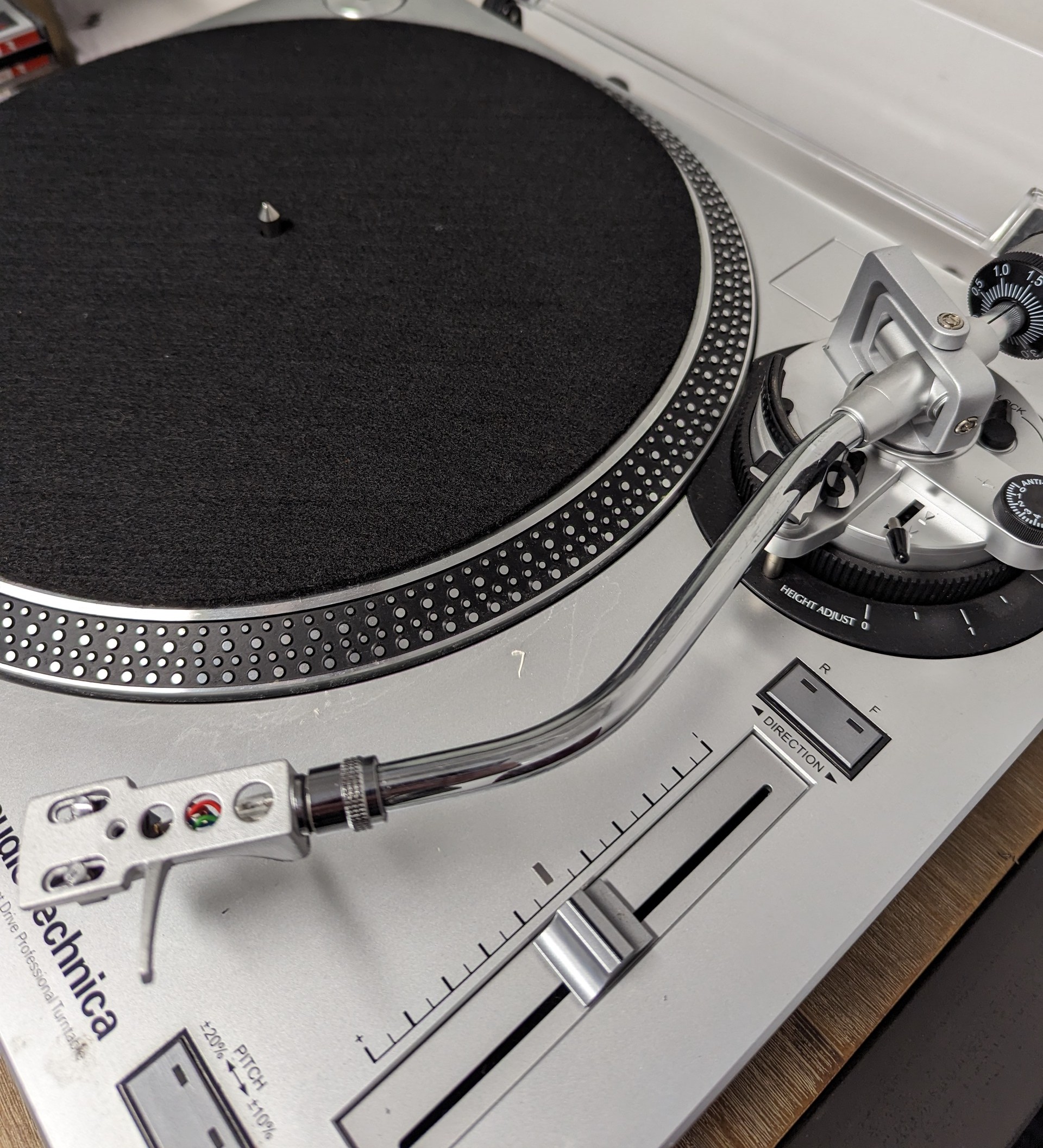
The first thing to do is to figure out the cause. In the event that your record always skips at the same place, the record itself is damaged. If the time of the skips varies and it happens with all your records, you’ve got a faulty record player. Both issues are normally fixable, though, and you’ll more than likely get your audio back to the quality it should be.
If it’s the Record Skipping
Before you try to go and fix your record, you should first understand how they work. Basically, the sound waves themselves are imprinted on the vinyl, that’s why they’re an analog, not digital format. The magnetic needle is capable of translating the soundwave into an electrical signal. For a more technical explanation, this blog post is a good place to go. If you want to learn more about the process of actually making vinyl, we’ve written here about it. So, if you’re noticing skips happening in the same place, the records themselves are damaged or impaired. The needle can’t pass through the damaged area smoothly, and causes a loud pop and a skip. Look closely at the area on your record, ideally with a magnifying glass. Identify whether the groove itself is damaged, or there’s a foreign object impairing the needle.
Damaged Grooves
If the grooves are damaged, that’s probably the hardest thing to fix. We recommend trying to recreate the groove by lightly applying pressure to the needle while it passes over the damaged area. If you do it right, that will create a new groove almost like the old one, and restore the quality of the sound to most of where it was before the damage occurred. DJs often place small objects like coins, nuts, or bolts on the headshell of the needle in order to apply that little bit of extra pressure. That prevents skipping during play of heavily scratched areas of the vinyl, although it won’t carve a new groove nearly as well.

Foreign Objects
In the event that there’s a foreign object lodged in the groove, you need to get rid of it for the record to play properly. Try using a cotton swab to gently lodge it free. In the event that doesn’t work, move on to something more rigid, but nothing with a sharp edge. If your vinyl just has granules of dirt or motes of dust lodged in it, you should be able to clean it just using compressed air.
If It’s the Record Player Skipping
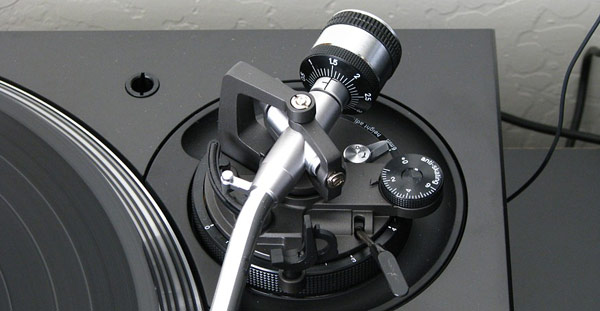
This is likely only a problem for you if you’ve got an old record player. That’s because it usually has to do with a lack of pressure on the headshell of the needle. If your record player is old, the trick used to be to place a penny on top of the needle. That would apply that tiny extra bit of pressure to get the needle in the groove properly. Modern record players come with an adjustable knob that accomplishes the same thing without adding a coin on top.
Not all records are in the same shape, but these techniques are usually helpful. You’ll almost certainly get better sound quality after you’ve applied them. They’re especially useful for digitizing vinyl records, especially for rare releases that you can no longer find. If you want to digitize them yourself, here’s our guide. If you want a professional to digitize for you, DVD Your Memories has been the best in Southern California for 15 Years. Here’s why you should choose us, and here are our four locations.
thanks for this advice Chris. Do you know if the method of creating a new groove would work for an LP with a 2 cm crack from it’s edge inwards? Its a rare LP, one of the thicker vinyl ones from the early 1970’s which I am biding for on ebay.
many thanks,
Anthony
Hi Anthony,
In my opinion, it would be a gamble. The older, thicker ones are much more difficult to work with in regards to the “create-a-groove” method, but still may work if you are extremely careful. If you are close-by to any of our locations, we’d love to take a look at it for you and give you a better assessment. Feel free to also email us pictures and we can take a look at the damage.
https://dvdyourmemories.com/store-locations
-Chris
Thank you SO much for sharing the coin trick… Turns out that was all I needed! 🙂
Thanks! the tip with the coin helped, my dad’s record player is really old!
Hey cpapciak,
Thank you! I had been having trouble with a vinyl I bought. It was brand new, although shipping ruined it’s folder, but it had no scratches but skipped terribly. A cleaning took care of some of the issues but it always skipped on one side particularly bad.
No one had ever told me the penny trick before, after trying it out it fixed the problem, I can finally listen to my Demon Days album without skips!
Thank you!
My daughter has a 3 in one player cd radio record player. Problem is she brought a record off amazon and it jumps I think the record is warped even though its brand new. It only skips or jumps rather in the beginning not in the middle of the record.I don’t know how to fix this
So I recently got some records for a Victoria all in one player I and very happy with the product and albums except it seems to skip on my Micheal Jackson thriller album. At first I thought it’s an old album so I got s new copy brand new press and it skips ( not as much) any thoughts ! I tried the penny trick since mine doesn’t have an adjustment knob but this didn’t work! I’m at a loss on what todo !
would cold weather make records skip. Im trying to figure out if its the player or the records. I just bought them 2 weeks ago but they were in my car for a week and a half.